

What to look for in a garage door manufacturer
Before diving into specific brands (in a hurry?), it's crucial to understand the criteria that define top garage door companies. Garage door quality isn't just about appearance; it's a blend of durability, safety features, and energy efficiency. When evaluating garage door suppliers, consider factors like material options—steel, wood, aluminum, or composites—each offering unique benefits for residential garage doors.
Material and durability
Steel doors dominate the market for their strength and low maintenance, but insulated steel options from leading manufacturers provide superior thermal performance. Wood doors add elegance but require more upkeep, while fiberglass and composites resist warping in humid climates. Look for brands using high-grade steel with thicknesses of 25-gauge or better for enhanced garage door quality.
Insulation and energy efficiency
In 2026, energy-efficient garage doors are a priority, especially with rising utility costs. Top manufacturers offer R-values ranging from 6 to 20, where higher numbers indicate better insulation. Features like thermal breaks and weather seals prevent heat loss, making these doors ideal for attached garages.
Design and customization
Aesthetic versatility is key. The best garage door brands provide extensive styles—traditional, carriage house, contemporary—with customizable windows, hardware, and colors. Smart integration, such as Wi-Fi openers compatible with Alexa or Google Home, is increasingly standard.
Warranty and support
Reliable suppliers back their products with warranties of 10-25 years on materials and lifetime on springs. Excellent customer service, including nationwide dealer networks, ensures prompt installation and repairs.
Durability rating: Assess resistance to dents, rust, and wind loads (up to 150 mph in hurricane-prone areas).
Pricing tiers: Entry-level ($800-$1,500), mid-range ($1,500-$3,000), premium ($3,000+).
Safety features: Auto-reverse sensors and reinforced tracks are non-negotiable.
For further reading, check the Door & Access Systems Manufacturers Association (DASMA) standards.
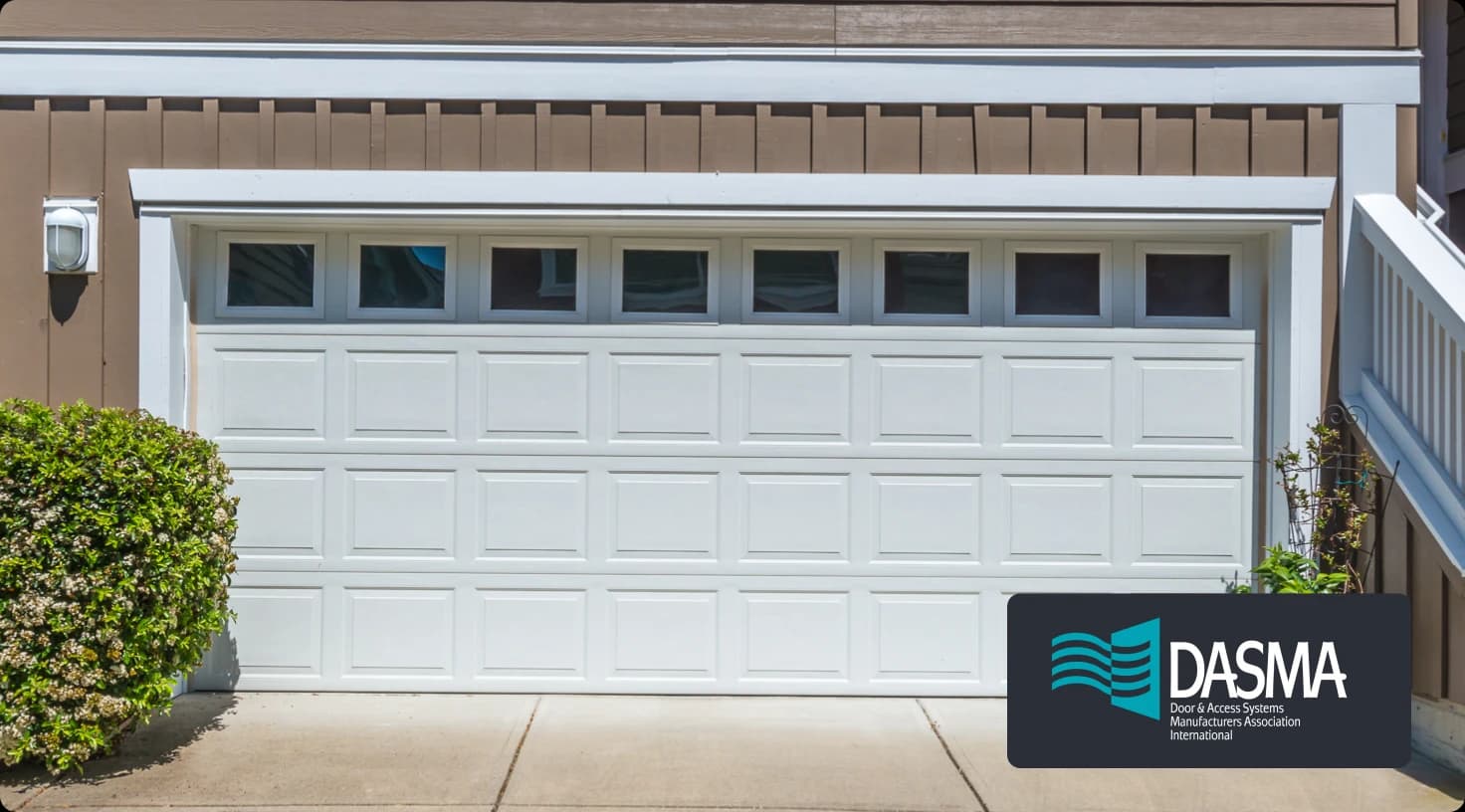
Top garage door manufacturers in 2026
Based on 2025 industry benchmarks, we've selected the leading garage door brands for a thorough review. These top garage door companies excel in innovation, customer satisfaction, and product diversity, making them prime choices for garage door suppliers.
Clopay
Clopay remains a frontrunner among the best garage door manufacturers, renowned for its premium residential garage doors. Founded in 1975, this Ohio-based company offers an extensive lineup, from classic raised-panel designs to modern flush styles. Their Signature Series features gallery-quality wood overlays on steel bases, blending beauty with brawn.
Garage door quality shines through in Clopay's use of Intellicore insulation, a polyurethane foam that achieves R-values up to 20.2—among the highest for insulated steel doors. Customers praise the wind-rated options, certified for up to 140 mph, ideal for coastal homes. Pricing starts at $1,200 for basic models, scaling to $4,500 for custom premium doors.
Standout features include the Clopay SmartConnect app for remote monitoring and the EcoView windows that maximize natural light without compromising security. With a lifetime warranty on door sections and a robust dealer network, Clopay scores 4.8/5 in quality ratings from sources like Consumer Reports.
Pros: Superior insulation, customizable aesthetics, excellent warranty.
Cons: Higher price point for premium lines.
Best For: Homeowners seeking luxury and energy efficiency.
Visit the Clopay official website for design tools and dealer locators.
Amarr
Amarr, part of the ASSA ABLOY group, has solidified its position as one of the top garage door companies with a focus on American-made quality since 1951. Their Hillcrest and Heritage collections cater to traditional tastes, while the Urban series appeals to contemporary designs.
Emphasizing garage door quality, Amarr uses galvanized steel with baked-on finishes for rust resistance. Insulation options via Polyurethane fill yield R-18 ratings, and their doors meet stringent safety standards like UL 325. Entry-level pricing hovers around $900, with high-end models reaching $3,500.
Key features include the SecureView glass for privacy and strength, plus compatibility with myQ smart technology. Amarr's 25-year warranty on steel and paint finish underscores their reliability, earning a 4.7/5 in durability tests.
Pros: Affordable premium options, strong wind resistance, easy customization.
Cons: Limited wood alternatives compared to competitors.
Best For: Budget-conscious buyers wanting solid performance.
Explore more at the Amarr website.
Wayne Dalton
Wayne Dalton, established in 1954, is a pioneer in garage door brands, innovating with the first torsion spring system. In 2026, their Classic Steel and Carriage House lines dominate the residential market, offering seamless integration with smart home ecosystems.
Garage door quality is evident in their 25-gauge steel construction and Safe-T-Plus safety features, including pinch-resistant panels. Insulation reaches R-16.9 with polyurethane, and prices range from $1,000 to $4,000. The TorqueMaster spring system reduces injury risk during operation.
Unique to Wayne Dalton is the iDrive opener bundle, providing battery backup and app control. With a 4.6/5 quality rating, their doors are lauded for quiet operation and longevity.
Pros: Innovative safety tech, versatile styles, nationwide availability.
Cons: Installation can be pricier due to specialized hardware.
Best For: Tech-savvy homeowners prioritizing safety.
Check out Wayne Dalton's site for virtual previews.
Overhead Door Corporation
As one of the oldest names in the industry since 1921, Overhead Door is synonymous with the best garage door manufacturers. Their Thermacore collection leads in insulated residential garage doors, using a sandwich of steel and foam for R-17 insulation.
Quality construction features corrosion-protected steel and robust hinges, with pricing from $1,100 to $3,800. The brand's legacy includes the invention of the upward-lifting door, and modern iterations include LED lighting options in panels.
Overhead Door's Create-A-Door tool allows precise customization, and their 20-year warranty covers rust-through. Rated 4.7/5 for overall performance, they're a go-to for contractors.
Pros: Historical reliability, high insulation, user-friendly design tools.
Cons: Fewer smart features in base models.
Best For: Traditionalists valuing proven durability.
Learn more via the Overhead Door website.
CHI Overhead Doors
CHI (Overhead Door Company of Texas) has surged in popularity by 2026, offering high-value garage door suppliers with a focus on customization. Their Modern Steel and Vintage Wood lines cater to diverse tastes, all made in the USA.
Garage door quality is bolstered by 20-gauge steel and optional aluminum frames for lightweight strength. Insulation options hit R-18, with prices starting at $950 and topping $3,200. The Secure Shield coating resists fading and chipping.
CHI's app-integrated openers and decorative hardware kits enhance appeal. A lifetime prorated warranty earns them a 4.5/5 rating in customer satisfaction surveys.
Pros: Competitive pricing, extensive hardware options, fast shipping.
Cons: Dealer network is growing but not as vast as legacy brands.
Best For: Custom projects on a moderate budget.
Visit CHI's official page for brochures.
Raynor
Raynor Garage Doors, family-owned since 1944, rounds out our list of top garage door companies with a commitment to innovation. Their Axiom collection features composite materials for wood-like aesthetics without the maintenance.
Quality highlights include galvanized steel cores with R-16 insulation and impact-resistant options for storm areas. Pricing is accessible at $850-$3,000, making them appealing garage door brands for value seekers.
The myQ-enabled openers and Quiet Glide system minimize noise. Raynor's 25-year warranty and 4.6/5 quality score reflect their solid reputation.
Pros: Eco-friendly composites, quiet operation, budget-friendly premiums.
Cons: Less emphasis on ultra-high-end luxury.
Best For: Environmentally conscious buyers.
More details at Raynor's site.
Garage door manufacturer comparison table
To aid in your garage door manufacturer comparison, here's a side-by-side overview of key attributes for the top brands in 2026. This table highlights pricing, quality ratings (out of 5), insulation (R-value), and standout features.
Brand | Starting Price | Quality Rating | Max R-Value | Key Features | Warranty |
|---|---|---|---|---|---|
Clopay | $1,200 | 4.8 | 20.2 | Intellicore insulation, SmartConnect app | Lifetime on sections |
Amarr | $900 | 4.7 | 18 | SecureView glass, myQ compatibility | 25 years on steel |
Wayne Dalton | $1,000 | 4.6 | 16.9 | TorqueMaster springs, iDrive openers | Lifetime limited |
Overhead Door | $1,100 | 4.7 | 17 | Thermacore tech, Create-A-Door tool | 20 years |
CHI | $950 | 4.5 | 18 | Secure Shield coating, hardware kits | Lifetime prorated |
Raynor | $850 | 4.6 | 16 | Composite options, Quiet Glide | 25 years |
This comparison underscores how each brand balances cost and garage door quality. For instance, Clopay leads in insulation, while Raynor offers the best entry-level value. Data sourced from DASMA and independent reviews; prices are approximate for standard 16×7 single-car doors.
Factors to consider when choosing a garage door supplier
Beyond brand reviews, several elements influence your selection of garage door suppliers. Climate plays a role—opt for insulated models in cold regions and wind-rated ones in stormy areas. Budget-wise, factor in installation costs ($200-$500) and potential energy savings from high R-values.
Local availability and installation
Choose manufacturers with strong local dealer support to ensure proper fitting. Certified installers prevent issues like misalignment, which can void warranties.
Sustainability and innovation
In 2026, look for eco-certifications like ENERGY STAR ratings. Brands incorporating recycled materials or solar-compatible openers align with green building trends.
Customer reviews and longevity
Aggregate sites like BBB and Yelp reveal real-user experiences. Prioritize brands with low complaint rates and high satisfaction for residential garage doors.
Measure your opening accurately (width, height, headroom).
Consider curb appeal—match door style to home architecture.
Budget for accessories like keyless entry ($100-$300).
For expert advice, refer to the U.S. Department of Energy's garage door guides.

Tools for garage door businesses: Streamlining operations with Workiz
Once you've selected a top garage door manufacturer, efficient business management is key to success – specially for installers, repair services, and suppliers handling field operations. Enter Workiz, a powerful field service management (FSM) software tailored specifically for garage door companies. This all-in-one platform automates workflows, reduces paperwork, and helps teams book up to 3x more jobs with online booking and AI-powered 24/7 call handling.
Garage door pros rely on Workiz for:
Scheduling – Drag-and-drop calendars and custom job types to keep techs fully booked
Dispatching – GPS tracking and auto-assign the closest technician in seconds
Invoicing – Create and send professional invoices on the spot with automatic payment reminders
Estimates & Proposals – Build branded, detailed quotes that win more jobs
Inventory Management – Real-time parts tracking so you never run out mid-install
Everything lives in one easy dashboard that scales from solo techs to large fleets. Thousands of garage door companies use Workiz to save hours on admin and grow revenue faster.
Installation and maintenance tips for optimal performance
Even the best garage door from top garage door companies requires proper setup and care. Professional installation ensures balance and safety, typically taking 4-6 hours.
Installation best practices
Align tracks precisely and lubricate moving parts with garage door-specific silicone spray. Test auto-reverse by placing a 2×4 under the door— it should rebound immediately.
Maintenance routine
Monthly checks include tightening hardware, inspecting cables for fraying, and cleaning panels. Annual professional tune-ups extend lifespan to 20-30 years. For insulated doors, seal edges to maintain efficiency.
Replace weatherstripping every 5 years.
Update openers for smart features if needed.
Monitor for unusual noises indicating spring wear.
These steps preserve garage door quality, reducing repair costs by up to 50%.
Conclusion: Selecting the right garage door brand for 2026
In summary, the best garage door manufacturers of 2026—Clopay, Amarr, Wayne Dalton, Overhead Door, CHI, and Raynor—offer a spectrum of options tailored to diverse needs. Clopay excels in premium insulation, Amarr in value-driven quality, and Raynor in sustainable affordability, as highlighted in our garage door manufacturer comparison. By weighing factors like pricing, features, and warranties, homeowners and contractors can confidently select from these top garage door companies.
Looking ahead, expect further advancements in AI-driven diagnostics and recyclable materials, enhancing garage door quality and sustainability. Investing in a reputable brand not only boosts home value by 5-10% but also ensures peace of mind. Consult local experts and use our guide to make an informed choice for your residential garage doors.
For personalized recommendations, reach out to certified dealers or explore manufacturer resources today.
Frequently asked questions
The best garage door material depends on your local climate, primarily based on the need for Insulation (R-value), Moisture Resistance, and UV/Heat Resistance.
🚪 Material recommendations by climate
Climate type
Best material options
Key benefit
Cold or snowy 🥶
Insulated steel, composite (faux wood)
High R-value (Insulation)
Hot and sunny 🔥
Insulated steel, aluminum, fiberglass
Heat resistance & prevents heat transfer
Humid, rainy, or coastal 💧
Aluminum, fiberglass, vinyl, composite
Rust-proof & high moisture resistance
Mild or temperate 🌤️
Steel, wood
Durability & Aesthetic Variety
🛠️ Quick material pros & cons
Focus on these material properties relative to your climate:
Insulated steel: Excellent R-value; great for temperature extremes. Prone to rust if coating is damaged (bad for coastal).
Aluminum: Naturally rust-proof and lightweight; excellent for coastal/humid areas. Prone to denting.
Fiberglass / vinyl: Highly resistant to moisture, salt air, and dents; low maintenance. Fiberglass can fade/vinyl can be less flexible in extreme cold.
Wood composite: Best of both worlds; low maintenance, resists rot/warping, often insulated.
Natural wood: Beautiful, but high maintenance and prone to rot/warping in wet climates. Best in hot, dry climates.
Remember: For an attached garage, always choose a door with a high R-value (R-12 or higher) for energy efficiency.
The total cost for replacing a garage door includes the price of the door itself, professional installation labor, and potentially a new opener. Prices vary most significantly based on the door's material, size, and insulation (R-value).
Total installed cost ranges
Cost factor
Average range (Installed)
Low-end (Basic steel)
Total project cost (All Doors)
$1,200 – $4,500
~$700
Single-car door (9′ x 7′)
$700 – $2,700
~$700
Double-car door (16′ x 7′)
$1,000 – $3,500
~$1,000
Professional labor only
$200 – $600
~$150
Installed cost by material
Material type
Average installed price range
Key cost driver
Steel
$700 – $2,500
Insulation thickness, door gauge (thickness).
Aluminum
$800 – $2,500
Design complexity (often used for full-view glass).
Fiberglass / vinyl
$1,000 – $2,600
Superior durability and moisture resistance.
Composite (Faux wood)
$1,500 – $5,000
Higher quality aesthetic finish and insulation.
Natural Wood
$1,200 – $4,000
Wood species, level of customization.
Common additional costs
Insulation upgrade (High R-value): Adds $200 – $600 to the door price.
New opener installation: Adds $300 – $900 (for parts and labor).
Haul away old door: Typically $50 – $200.
Routine maintenance can prevent costly repairs and significantly extend the life of your garage door and opener system. Focus on these three key areas:
Lubricate moving parts annually Apply a silicone or lithium-based grease/spray lubricant to all moving metal parts, including the rollers, hinges, tracks, and springs. This reduces friction, prevents rust, and ensures smooth, quiet operation. Do NOT use WD-40, as it is a degreaser and can dry out the components.
Inspect and tighten hardware Over time, the motion and vibration of the door can cause nuts, bolts, and mounting brackets to loosen. Once or twice a year, visually inspect the tracks, hinges, and opener connections, and use a wrench to gently tighten any loose hardware. Pay special attention to the brackets that hold the door tracks to the garage walls.
Check the door balance (The "balance test") A properly balanced door requires less effort from the opener, extending the motor's life. Disengage the automatic opener (pull the emergency release cord). The door should stay in place when lifted manually halfway open. If it drifts up or down, the springs are improperly tensioned, and you should call a professional technician for adjustment.
Garage door insulation is critical for energy efficiency, especially when the garage is **attached to the house** or has a living space above it. The door acts as the largest thermal weak point, and insulating it creates a barrier that significantly reduces heat exchange.
1. The R-value and heat transfer
The effectiveness of insulation is measured by its R-value (Resistance to heat flow). A higher R-value means less heat transfer:
In winter: High R-value insulation prevents warm, conditioned air from your home (and potentially your garage) from escaping outside, reducing the strain on your furnace.
In summer: Insulation blocks intense external heat from transferring through the door panel into the garage, which prevents that heat from radiating into adjacent interior rooms.
2. Impact on HVAC system and bills
By keeping the garage temperature more stable, you directly reduce the workload on your home's main HVAC system:
Reduced strain: The furnace (winter) and air conditioner (summer) don't need to run as often or as long to compensate for the temperature loss/gain in the attached garage area.
Lower costs: Reduced HVAC strain translates directly into lower energy consumption and noticeable savings on your monthly utility bills.
🔑 Key factors for maximum efficiency
Factor
Recommendation
Result
R-value
Choose R-12 or higher for attached garages.
Maximum thermal resistance.
Air sealing
Ensure high-quality weatherstripping around the perimeter.
Prevents unconditioned air drafts (air leaks).
Insulation type
Prioritize injected Polyurethane foam.
Superior thermal performance and structural integrity.
Insulating your garage door is a cost-effective measure that can lead to long-term energy savings and improved comfort.