

You may have landed here with two questions in mind:
Is becoming a locksmith right for me?
How do I get a locksmith license in Texas?
To address your first question, more demand is being created for security professionals as the locksmith industry is evolving and becoming increasingly high-tech. In several states, locksmiths earn an income comparable to those with a bachelor's or master's degree, considering that the majority of locksmiths study in school only for a short period of time.
If you want to start working as a locksmith in Texas, keep in mind that obtaining a license is mandatory. To get one, you need to submit your application, pass a criminal background check, and get fingerprinted. Business owners need to pass an examination and fulfill continuing education requirements. Keep reading to learn how it all works.
How Do You Get a Locksmith License in Texas?
1. Ensure you meet the requirements for a locksmith license.
Locksmith licenses in Texas are administered by the Private Security Bureau of the Texas Department of Public Safety (TOPS). Here's what you need to apply:
To obtain an Individual or Business License:
Complete your application: Create an account with TOPS and complete the required forms. You can find applications for individuals and businesses here.
Age: Applicants must be at least 18 years old.
Training and certifications: Complete 2 years of experience as a locksmith or take a 48-hour locksmith course, a 600-hour fundamentals course, pass a test and complete a full year of work experience.
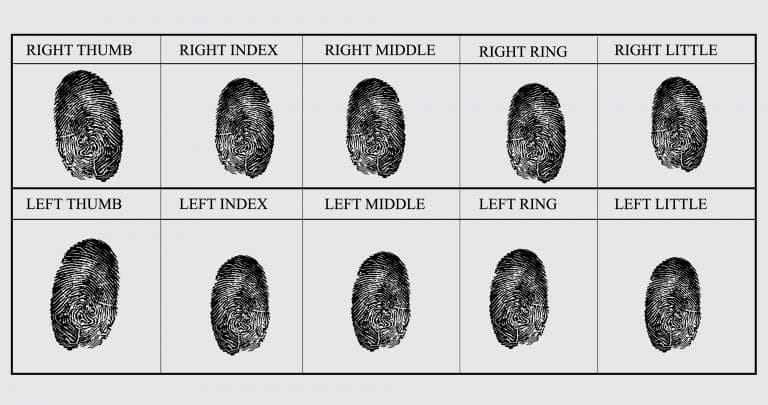
Criminal background check: Submit a fingerprint card, complete a background check, and pay a fee.
Military service discharge: If applicable, must not have been dishonorably discharged.
Pass an exam: Only managers of a locksmith business must complete and pass a licensing exam.
Business insurance: Submit proof of liability insurance if you are a business owner.
2. Pass a criminal background check.
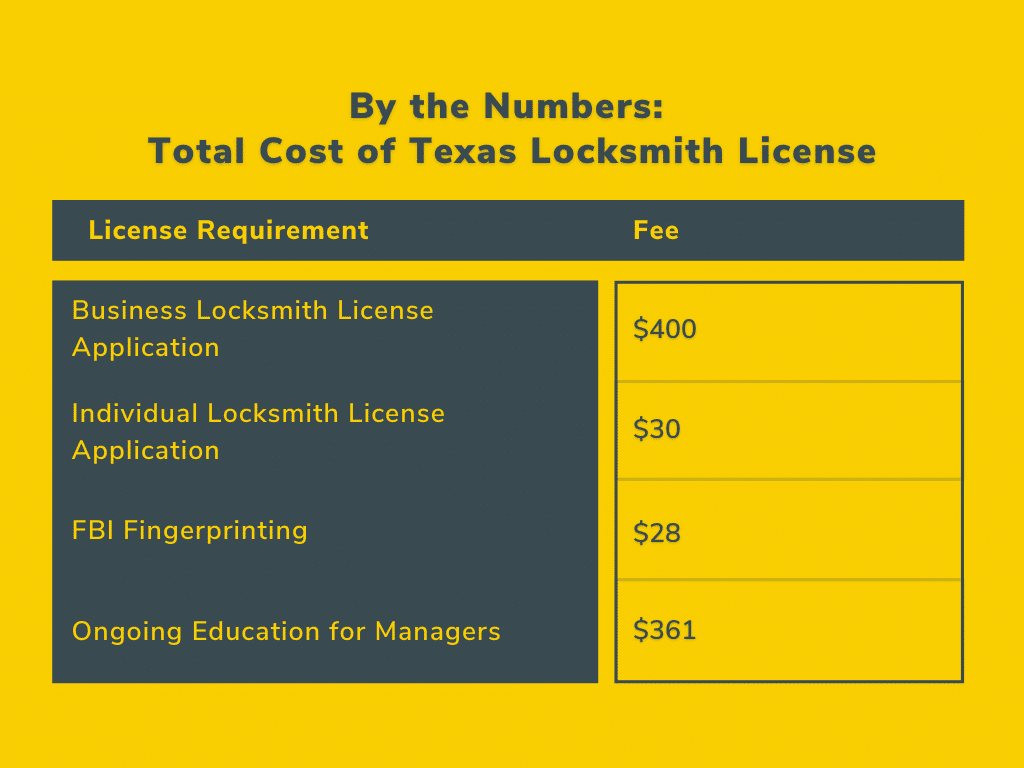
Schedule a fingerprinting appointment at an IdentoGo location, submit your fingerprints electronically through IdentoGo, and pay a fee of $28. You will also have to complete an FBI background check. See the official FBI website for more information about the process.
What criminal history can get you disqualified?
Felony conviction
Class A misdemeanor
Addiction to illicit drugs or alcohol
3. Pass the Texas locksmith licensing exam.
An individual locksmith is not required to take an exam for a professional license. If you are a qualified manager of a locksmith business, you'll need to take an exam with TOPS, once you have completed your training and education of at least 2 years. After you pass the exam, you will need to complete 16 hours of continuing education every 2 years, at a cost of $361.
Study material for business managers:

4. Pay application fee.
A Texas locksmith license costs $30 for individuals and $400 for business owners.
5. Submit your application.
The application process is completely online, so you can start the process at dps.texas.gov.
Still on the Fence?
If you love working with your hands, want a career that doesn't require too much schooling and pays well while always being in demand, a locksmithing career—whether you go it alone or start your own locksmith business —may be just for you. You can get started by researching job openings available in your city, reading up on the different ways to find employment and market your own services to find customers fast. Also, let's not forget about the technology in locksmithing. Whether you are in the field or in the office, you'll need a field management software to use the best tools, such as Workiz's Locksmith Scheduling and Management Software to schedule jobs, handle customer inquiries, keep your clients updated with notifications, send invoices, receive payments, and, most importantly, handle inventory. It's a one-stop-hub to run your business and stay sane, helping you finish jobs faster and bring in more revenue. Sign up for a free 7-day trial of Workiz!