
Benefits of a Massachusetts electrician license
Earning potential rises significantly with a license—Master Electricians can command premium salaries or launch their own businesses, while Journeymen outpace unlicensed workers in wages. The license also enhances your professional reputation, showcasing your expertise in safety and electrical standards to employers and clients. With a reciprocity agreement with New Hampshire, it offers flexibility to work across state lines. In essence, it's a valuable credential for a stable, respected, and lucrative career in Massachusetts.
Job growth for electricians in Massachusetts
For Massachusetts specifically, the most recent long-term occupational projections available from Projections Central (covering 2020–2030, as newer state-specific data up to 2025 isn't fully published yet) indicate the following:
Projected Growth (2020–2030): Employment of electricians in Massachusetts is expected to grow by approximately 10.1% over this decade, outpacing the national average.
Annual Job Openings: This growth, combined with replacements for retirees and those exiting the field, translates to an estimated 620 job openings per year on average through 2030.
Context: Massachusetts' growth is driven by booming sectors like commercial construction, renewable energy initiatives (e.g., solar and wind projects), and infrastructure upgrades in urban areas like Boston. The state's emphasis on energy efficiency and green building codes further boosts demand for skilled electricians.
Job growth for electricians across the United States
Nationally, the BLS provides the most authoritative projections, with the latest detailed outlook covering 2023–2033 (released in 2024):
Projected Growth (2023–2033): The BLS estimates a 6.1% growth rate for electrician jobs nationwide over this decade, slightly above the average for all occupations (about 3–4%).
Employment Numbers: In 2023, there were approximately 683,000 electricians employed in the U.S. By 2033, this is projected to increase to around 725,000, adding roughly 42,000 new jobs.
Annual Job Openings: Factoring in growth and replacements (retirements, career changes), the BLS projects about 73,500 openings per year on average through 2033.
Context: National growth is propelled by increasing needs for electrical work in renewable energy (solar, wind), electric vehicle charging infrastructure, and ongoing construction, though tempered by automation and economic variability.
2026 Industry Update: Emerging Trends and Best Practices
In 2026, the electrical industry in Massachusetts continues to accelerate, fueled by the state’s aggressive clean energy goals and rapid adoption of new technologies. The Board of State Examiners of Electricians has rolled out preparations for the 2026–2028 code cycle, with continuing education providers updating programs to align with anticipated Massachusetts amendments to the 2026 National Electrical Code (NEC). Key shifts include expanded focus on electric vehicle (EV) charging infrastructure, advanced energy management systems, and smarter integration of renewables like high-efficiency bifacial solar panels and battery storage solutions. Demand for skilled electricians remains strong, with national projections showing 9% growth through 2034 and Massachusetts seeing sustained needs in solar installations, smart home systems, and grid modernization to meet greenhouse gas reduction targets.
Comparison Table:
Aspect | Traditional/Previous Approaches | 2026 Current Best Practices |
|---|---|---|
Renewable Energy Installations | Basic solar panel setups with minimal storage | High-efficiency bifacial panels + integrated battery systems for optimized energy yield and grid resilience |
EV Charging Infrastructure | Standard 240V outlets or basic Level 2 chargers | Smart, networked Level 2/Level 3 stations with load management and GFCI/HF-rated safety features per 2026 NEC updates |
Smart Home/ Building Integration | Isolated devices (e.g., separate thermostats, lights) | IoT-connected systems with energy management (EMS) and power control for whole-home efficiency and monitoring |
Code Compliance & Education | Periodic NEC reviews every few years | Annual alignment with 2026–2028 MA cycle; early adoption of NEC changes like arc flash labeling, EVSE requirements, and streamlined load calculations |
Safety & Hazard Management | Standard GFCI and basic arc flash awareness | Enhanced HF-rated GFCI for variable-speed equipment; expanded arc flash labeling and monitoring per updated NEC Article 110 |
Looking ahead to the rest of 2026 and into 2027, electricians who specialize in these high-growth areas will gain a competitive edge. Pursue additional certifications in EV charger installations, solar-plus-storage systems, or smart building technologies to capture new opportunities. Stay proactive by completing your code update training early in the 2026–2028 cycle and leveraging digital tools for project management and compliance tracking. Adapting to these advancements not only ensures regulatory compliance but also positions you for higher-paying roles in a market increasingly driven by sustainability and innovation.
The different electrician licenses in Massachusetts
Massachusetts' electrician licensing system is regulated statewide by the Board of State Examiners of Electricians, ensuring uniform standards across the Commonwealth. Unlike some states with local oversight, Massachusetts issues licenses for journeyman, master, and contractor roles through a centralized process, each tied to specific education, experience, and exam requirements. These licenses cater to distinct career stages, from hands-on technical work to running an electrical business. Here's a breakdown of the main electrician licenses available in Massachusetts and what they entail.
License Type | Key Requirements | Scope of Work | Average Hourly Pay |
|---|---|---|---|
Journeyman Electrician | 8,000 hours (4 years) experience, 600 hours education, pass exam | Installs/repairs under supervision | $30.50 |
Master Electrician | 1 year as journeyman, 150 hours education, pass exam | Plans, installs, supervises all voltages | $40.00 |
Systems Technician | 4,000 hours (2 years) experience, 300 hours education, pass exam | Low-voltage systems (fire alarms, security) | $28.75 |
Systems Contractor | 1 year as technician, 75 hours education, pass exam | Runs low-voltage business, hires others | $65,000 (annual avg.) |
Journeyman Electrician: A foundational license requiring 8,000 hours of supervised work (about four years) and 600 hours of approved education. Journeymen pass a two-part exam to install and repair electrical systems under a master's oversight, making it a key step for hands-on careers.
Master Electrician: The top-tier license for independent work, requiring at least one year as a journeyman, 150 additional education hours, and a two-part exam (trade and business/law). Masters can design, install, and supervise projects across all voltage levels and employ apprentices.
Systems Technician: Focused on low-voltage systems (e.g., fire alarms, security), this license needs 4,000 hours of experience (two years) and 300 hours of education, plus an exam. It's ideal for specialized technical roles.
Systems Contractor: A business-oriented license for low-voltage work, requiring one year as a systems technician, 75 hours of education, and an exam. Contractors can operate a business and hire technicians for projects like telecom or alarm systems.
Massachusetts doesn't offer a standalone “maintenance electrician” license—maintenance tasks fall under journeyman or technician scopes. All licenses require exams administered by PSI, and reciprocity is available only with New Hampshire. This structured system supports career progression from apprentice to business owner, tailored to Massachusetts' rigorous standards.
Key requirements for each license level
Massachusetts' electrician licenses have clear, state-mandated requirements enforced by the Board of State Examiners of Electricians. Whether you're starting as an apprentice or aiming to lead a company, here's what you need to qualify for each level.
License Type | Key Requirements |
|---|---|
Journeyman Electrician | 8,000 hours (4 years) experience, 600 hours education, pass exam |
Master Electrician | 1 year as journeyman, 150 hours education, pass exam |
Systems Technician | 4,000 hours (2 years) experience, 300 hours education, pass exam |
Systems Contractor | 1 year as technician, 75 hours education, pass exam |
Journeyman Electrician: Requires 8,000 hours of practical experience (typically via apprenticeship) and 600 hours of Board-approved education, followed by a journeyman exam (70% passing score).
Master Electrician: Builds on journeyman status with at least one year of licensed experience, 150 hours of master-level education, and a two-part exam covering trade skills and business/law.
Systems Technician: Needs 4,000 hours of supervised low-voltage work and 300 hours of specialized education, plus a technician exam focused on systems like alarms and telecom.
Systems Contractor: Requires one year as a licensed systems technician, 75 additional education hours, and an exam to qualify for running a low-voltage business.
All applicants must submit experience documentation (signed by a supervising licensee) and pass PSI-administered exams. Education must be from Board-approved programs, and work experience is creditable within 20 years of application. This progression ensures electricians meet Massachusetts' high safety and competency standards.

How to get an electrician license in Massachusetts
The application process for an electrician license in Massachusetts is streamlined through the Board of State Examiners of Electricians, which oversees all licenses—Journeyman, Master, Systems Technician, and Systems Contractor—under a uniform statewide system. Unlike states with local variations, Massachusetts requires all applicants to meet standardized education, experience, and exam criteria, with applications processed through PSI, the Board's testing vendor. Here's a breakdown of the process for the primary license types:
State-level journeyman electrician license
This license is the entry point for performing electrical work independently under supervision, required for anyone installing, repairing, or maintaining electrical systems for heat, light, or power in Massachusetts.
Steps:
Complete Education and Experience: Accumulate 8,000 hours (about 4 years) of supervised electrical work experience through an apprenticeship or equivalent, plus 600 hours of Board-approved classroom education covering the National Electrical Code (NEC) and Massachusetts amendments.
Submit Application: Apply through PSI with a completed application (available at Mass.gov), including notarized work experience forms signed by a supervising licensee, proof of education, and a $226 fee ($60 processing, $80 Part I exam, $55 Part II exam, $31 license fee).
Pass the Exam: Schedule and pass the two-part Journeyman exam via PSI (70% passing score): Part I (70 questions, 3 hours) covers theory and NEC; Part II (30 questions, 1 hour) tests applied skills. Exams are open-book, allowing NEC and Massachusetts amendments.
Receive License: Upon passing, pay the $104 license fee at the test center (e.g., Auburn, Boston, or Springfield) to receive your license immediately. Renew every 3 years with 21 hours of continuing education (15 on Massachusetts Electrical Code).
State-level master electrician license
This license is required to independently plan, supervise, and perform electrical work or run a contracting business, building on journeyman credentials.
Steps:
Meet Prerequisites: Hold a Journeyman license for at least 1 year with active experience, and complete an additional 150 hours of Board-approved master-level education.
Submit Application: File with PSI, including proof of journeyman experience, education certificates, and a $276 fee ($60 processing, $80 Part I exam, $55 Part II exam, $81 license fee).
Pass the Exam: Pass the two-part Master exam (70% passing score): Part I (80 questions, 4 hours) covers advanced electrical theory and NEC; Part II (50 questions, 2 hours) tests business and law knowledge. Open-book with approved references.
Receive License: Pay the $155 license fee post-exam to get your license. Renew triennially with 21 hours of continuing education.
Additional license types
Systems Technician: For low-voltage work (e.g., alarms), requires 4,000 hours (2 years) experience and 300 hours of education, plus a two-part exam ($226 fee). Scope is limited to systems like fire alarms or security.
Systems Contractor: For running a low-voltage business, needs 1 year as a technician and 75 hours of education, plus a one-part exam ($276 fee). Allows hiring technicians.
All applications require a Criminal Offender Record Information (CORI) check. Reciprocity is available only with New Hampshire via the ePLACE portal. Processing takes 30–90 days, and exams are scheduled at PSI centers statewide. Check Mass.gov for forms and updates.
Statewide licenses (Journeyman or Master Electrician)
Unlike some states, Massachusetts does not delegate Journeyman or Master Electrician licensing to local municipalities or counties. Instead, all electrician licenses are regulated uniformly across the Commonwealth by the Board of State Examiners of Electricians, ensuring consistent standards whether you're in Boston, Springfield, or a rural area. Below is an outline of the process for these key licenses, which apply statewide without local variations.
Steps:
Contact the Board of State Examiners of Electricians via Mass.gov to confirm requirements. Unlike some states, Massachusetts has no local variations—licenses are required statewide for all electrical work (no small-job exemptions like Louisiana’s $50,000 threshold).
Journeyman: Requires 8,000 hours (about 4 years) of supervised electrical work through an apprenticeship or equivalent, plus 600 hours of Board-approved classroom instruction (e.g., NEC, Massachusetts amendments).
Master: Requires at least 1 year as a licensed Journeyman (typically adding up to 5+ years total experience) and an additional 150 hours of master-level education.
Statewide Standard:
Journeyman: 8,000 hours of hands-on experience under a Master Electrician or Contractor, paired with 600 hours of theory and code training.
Master: 1 year of licensed Journeyman work, verified by a supervisor, plus 150 hours of advanced coursework.
Submit your application through PSI (the state’s testing vendor):
Journeyman: Provide notarized proof of 8,000 hours experience (e.g., affidavit from a Master Electrician), education transcripts, and $226 fee.
Master: Submit proof of 1 year as a Journeyman, 150 hours of education, and $276 fee.
Fees are fixed statewide: $226 for Journeyman (includes exams), $276 for Master. Apply online or at PSI centers (e.g., Boston, Worcester).
Journeyman Exam: Two parts—Part I: 70 multiple-choice questions, 3 hours, theory/NEC; Part II: 30 questions, 1 hour, applied skills. Open-book (NEC and Massachusetts amendments allowed), 70% passing score.
Master Exam: Two parts—Part I: 80 questions, 4 hours, advanced theory/NEC; Part II: 50 questions, 2 hours, business/law. Open-book, 70% passing score.
Study resources: Latest NEC, Massachusetts Electrical Code (527 CMR 12.00), and Ugly’s Electrical Reference. Exams are administered by PSI at statewide locations.
Licenses renew every 3 years (tied to the state’s cycle, not your birthday). Journeyman renewal is $78, Master is $117.
Requires 21 hours of continuing education per cycle (15 hours on Massachusetts Electrical Code, 6 hours on related topics). Submit via the ePLACE portal at Mass.gov.
Required Exams
Louisiana New Orleans W17
Journeyman Electrician License Practice Test
W19 National Standard Maintenance
Massachusetts Electrician License Reciprocity and Options
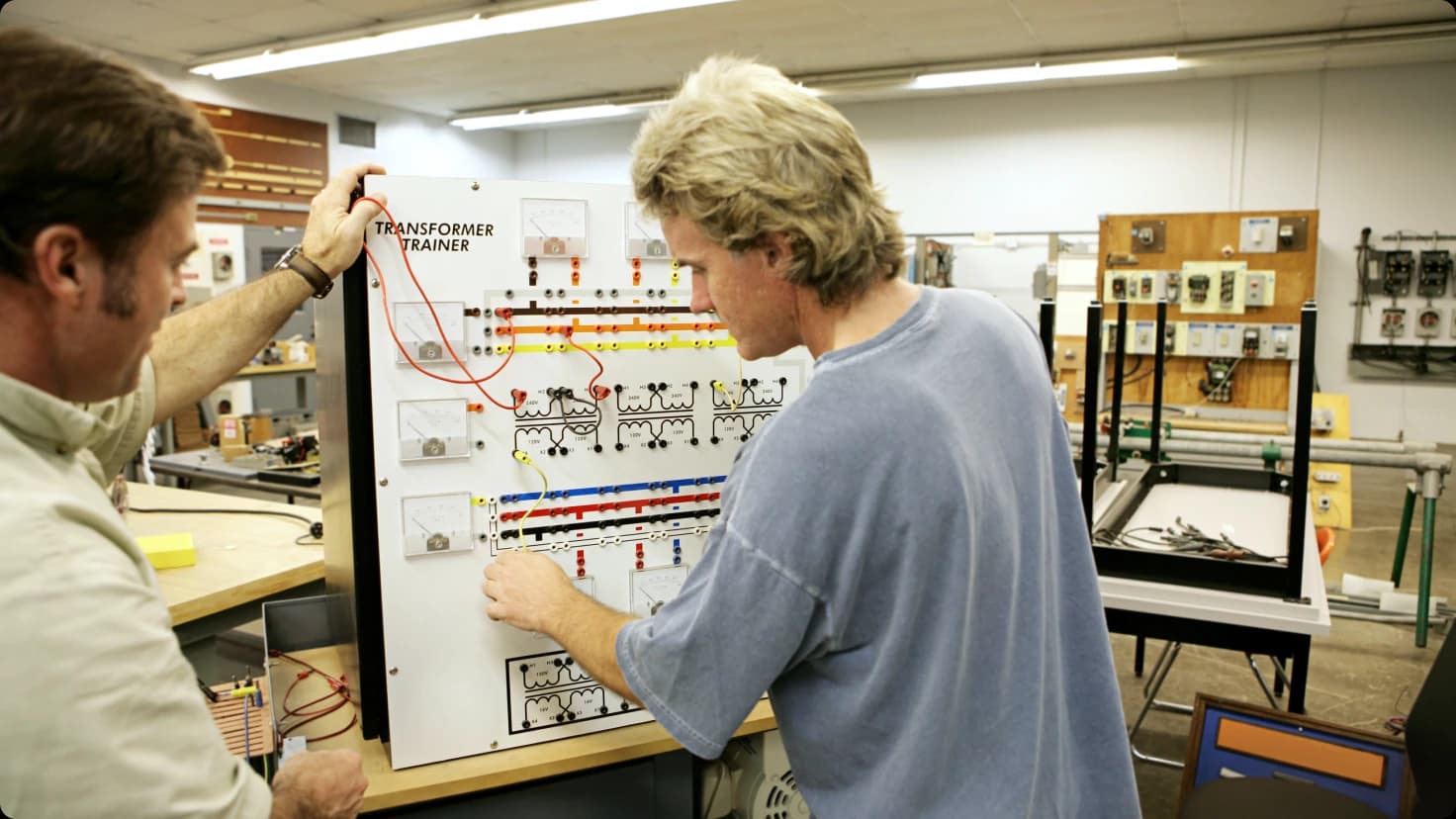
Massachusetts electrician license search
The Massachusetts Board of State Examiners of Electricians oversees all electrician licenses statewide, including Journeyman, Master, Systems Technician, and Systems Contractor credentials. You can use state-provided tools to verify an individual's license status, applicable to anyone performing electrical or low-voltage work, regardless of project size—unlike some states with cost-based thresholds.
Common methods:
Mass.gov License Verification: Visit elicensing.mass.gov and use the ePLACE portal's “Search License Records” tool to check active licenses by name, number, or profession.
Check with PSI Services: As the state's testing vendor, PSI provides license status updates post-exam. Access via psiexams.com or call (800) 733-9267.
Contact the Board Directly: Reach the Board of State Examiners of Electricians at (617) 727-9931 or email electrician.board@mass.gov.
Insurance requirements and safety standards
In Massachusetts, the Board of State Examiners of Electricians does not mandate specific insurance as a condition for obtaining or maintaining Journeyman, Master, Systems Technician, or Systems Contractor licenses. However, insurance is a practical necessity for electricians—especially those running businesses—and is often required by clients, employers, or local permitting authorities. Safety standards, enforced via the Massachusetts Electrical Code, are mandatory for all licensed electricians to ensure public safety and compliance.
Master electrician and business owners:
General Liability Insurance:
Recommended Coverage: $250,000–$1,000,000 per occurrence (industry standard, not state-mandated).
Purpose: Protects against property damage or bodily injury caused during electrical work, such as faulty wiring or accidents on commercial or residential jobs.
Workers' Compensation Insurance:
Requirement: Mandatory under Massachusetts law (M.G.L. c. 152) if you have employees—even one part-time worker.
Minimum Coverage: No set dollar amount specified by statute, but typically $100,000 per accident, $500,000 policy limit, and $100,000 per disease to meet state requirements via the Department of Industrial Accidents.
Exemption: Sole proprietors or partners with no employees can opt out but must file an affidavit of exemption with the state.
Journeyman and systems technician:
General Liability Insurance:
Recommended Coverage: $100,000–$500,000 per occurrence (optional but often required by employers or clients).
Purpose: Covers damages or injuries during supervised work, such as installation or maintenance tasks.
Workers' Compensation Insurance:
Requirement: Not applicable for individual licensees without employees; employers typically provide coverage for Journeymen or Technicians they hire.
Proof: While not required for licensing, a Certificate of Insurance (COI) naming clients or local building departments as certificate holders may be needed to pull permits or secure contracts.
Safety standards:
Massachusetts Electrical Code (527 CMR 12.00): Adopts the National Electrical Code (NEC) with state-specific amendments, enforced by the Board. All licensed electricians must comply—e.g., proper grounding, arc-fault protection, and GFCI requirements.
OSHA Compliance: Federal safety rules apply, including PPE (e.g., insulated gloves, eye protection) and lockout/tagout procedures for energized systems.
Continuing Education: 21 hours every 3 years (15 on code updates) ensures familiarity with evolving safety standards.
Does a Massachusetts electrician license have reciprocity with other states?
The Massachusetts electrician license, issued by the Board of State Examiners of Electricians, has limited reciprocity, applicable to Journeyman and Master Electrician licenses. Unlike some states with broader agreements, Massachusetts currently only maintains a reciprocity arrangement with New Hampshire for these license types. Systems Technician and Systems Contractor licenses do not have formal reciprocity agreements with any state.
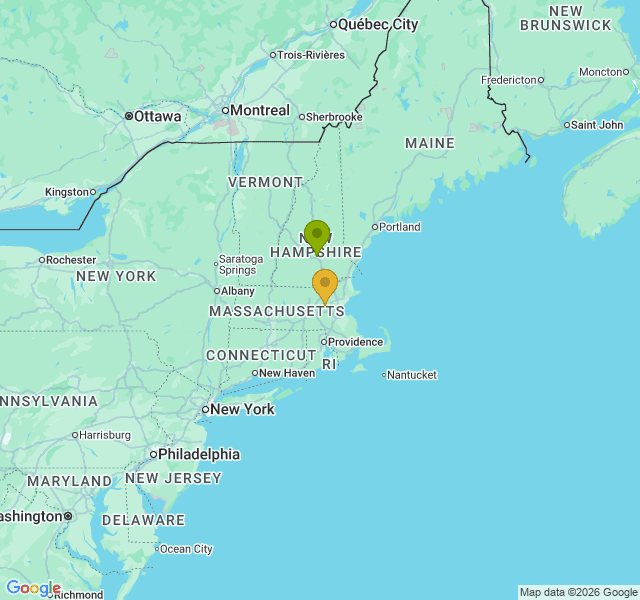
The Board of State Examiners of Electricians has a reciprocity agreement with the following state:
New Hampshire
Key points on reciprocity:
Eligibility: To qualify for reciprocity with New Hampshire, you must hold a valid Massachusetts Journeyman or Master Electrician license in good standing, with no disciplinary actions in the past three years. New Hampshire must recognize your license as equivalent based on similar experience and exam standards.
Trade Exam Exemption: Reciprocity with New Hampshire typically waives the trade-specific exam if your Massachusetts license meets their criteria. However, you may need to provide proof of education (e.g., Massachusetts Electrical Code training) or pass a business and law exam for a Master license.
Limitations: The agreement is exclusive to New Hampshire and does not extend to other states or to Systems Technician/Contractor licenses. Each license type (Journeyman or Master) is evaluated separately, and reciprocity is not automatic—you must apply through New Hampshire's licensing authority.
Statewide Application: Since Massachusetts licenses are issued statewide (not locally like in some states), the reciprocity applies uniformly to all Massachusetts Journeyman and Master license holders, simplifying the process compared to states with local variations.
What you should do:
If you're looking to use your Massachusetts Journeyman or Master Electrician license in New Hampshire, apply via the ePLACE portal at Mass.gov or contact New Hampshire's Office of Professional Licensure and Certification directly at (603) 271-2152. Submit proof of licensure, experience documentation, and any required fees (typically $50-$100). Confirm New Hampshire's specific requirements, as they may request additional education alignment or a partial exam.

Boosting your electrical business with Workiz
After earning your Massachusetts electrician license, Workiz field service software can accelerate your business growth. It boosts revenue by 22%, saves 20+ hours a week, and helps you win 3x more jobs with online booking and real-time inventory tracking. Over 120,000 professionals—including Massachusetts electricians—rely on Workiz to streamline jobs, send invoices, and get paid quickly from anywhere, whether you're in Boston or the Berkshires.
Workiz also enhances customer loyalty with automated reminders, text messaging, and review tools—perfect for building a strong reputation in Massachusetts' competitive market. Its GPS routing cuts gas costs by 30%, a big win for navigating the Commonwealth's urban and rural areas, while task tracking simplifies multi-day projects like rewiring or solar installations. New electricians can maximize leads and efficiency with tailored proposals and top-notch service, helping you stand out in a state driven by construction and renewable energy demands.